



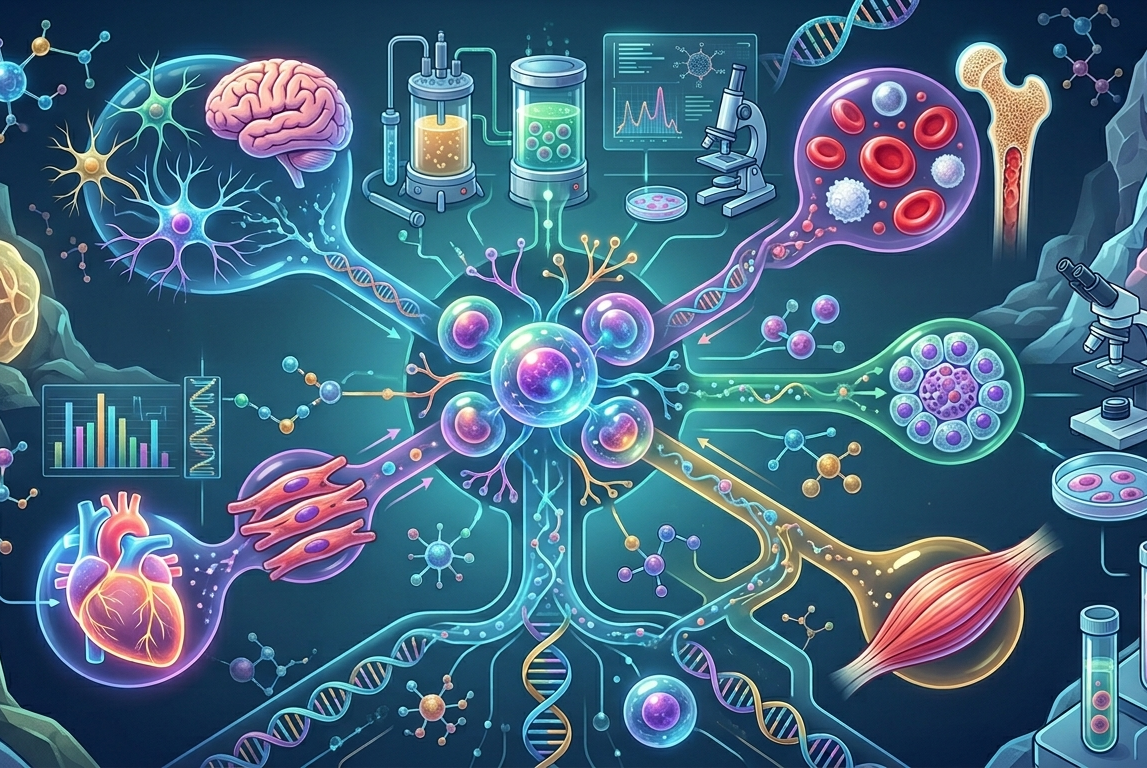
Stem cell therapy is revolutionizing modern medicine. It provides a regenerative means of healing, not just symptom management. It repairs damaged tissues and improves organ activity. The core of this advancement is the stem cells. These cells have special powers that no other cell in the body can equal. They are vital elements of contemporary therapeutic processes because of their ability to regenerate and diversify.
To learn about stem cell therapy, it is essential to know the types of stem cells. Each type has certain characteristics that affect its behavior in the body and its effectiveness in treatment. Such variations arise from different origins, applications, and responses. An accurate interpretation of these types helps patients and practitioners in making wise choices in their treatment.
To better understand how these cells are used in real-world treatments, read our detailed guide to stem cell treatment.
Defining Stem Cell in Therapy
Any stem cell to be used in the therapeutic process has two biological requirements that qualify it as a useful regenerative medicine. To begin with, it should be able to self-renew, that is, capable of replicating itself with time without any loss of its original qualities. Second, it has to be able to differentiate into cells that are specialized and perform certain functions in the body.
These two properties enable the stem cells to regenerate damaged tissues. These properties are strategically applied in the process of stem cell therapy in order to obtain the desired healing results. The cells are implanted in the body, whereby they either develop into the desired tissue or emit signals that induce tissue regeneration. This two-fold effect increases their therapeutic potential and expands their use in a variety of diseases.
Due to this, stem cells are not only replacement tools, but also biological triggers of healing. The other consideration of therapeutic stem cells is that they can communicate with the immune system of the body. The ability of some of the stem cells to decrease inflammation and regulate immune reactions is of significant use in chronic and autoimmune diseases. This immunomodulatory effect is an extra value to stem cell therapy. It describes the reasons behind the preferential use of some types of stem cells in clinical practice compared to others.
Types of Stem Cells Based on Differentiation Ability
The potency or the differentiation potential of the stem cells defines the number of different types of cells that the stem cells could develop. This feature is key in determining their therapeutic uses. Higher potency of stem cells means that they can be developed into a wider variety of tissues, and this makes them more versatile in treatment. This is, however, accompanied by complexity and risks.
The selection of the stem cell on the basis of potency is critically considered in clinical practice. Very high potency cells are commonly used in research because of safety issues. Conversely, the middle potency used in the cell therapies is common since it provides a balance between effectiveness and control. This method makes sure that the treatments are safe and effective. Learning about potency can also be used to predict the outcome of treatment.
As an example, stem cells that are more versatile may be useful in conditions that mandate multi-tissue regeneration. Conversely, local injuries need cells that are specific to particular tissues. Such a specific method enhances the general success of stem cell treatment.
Totipotent Stem Cells
The most potent kind of stem cells are the totipotent stem cells in terms of their differentiation capacity. They are the only cells that can produce all types of cells of the human body, including extra embryonic tissues. In principle, this implies that they are able to produce a complete organism using just one cell. Such high potency renders them biologically interesting and very important in early development. But, in the context of stem cell therapy, totipotent stem cells have not been applied clinically.
These cells are found only in the very early embryonic development and, therefore, are unavailable to therapeutic application. Ethical reasons also restrict their use in medicine. Therefore, their contribution is limited to research instead of treating patients. Although their use in the clinic is limited, totipotent stem cells can teach scientists the basic principles of human development. Such knowledge can play an indirect role in the development of regenerative medicine. Through the research of these cells, researchers are able to come up with safer and more effective therapeutic options. They are more important in the guidance of innovation than in practice.
Pluripotent Stem Cells
Pluripotent stem cells can be developed into nearly all the types of cells of the human body. They are able to develop tissues of all three germ layers and are therefore very versatile. This feature enables them to have the potential to treat a broad scope of diseases that are related to various organs and systems. One of their greatest strengths in regenerative medicine is their flexibility. Modern science has two major types of pluripotent stem cells.
Embryonic stem cells are obtained by the pluripotent embryonic embryos and are naturally pluripotent. On the contrary, induced pluripotent stem cells are produced through reprogramming of the adult cells to a pluripotent condition. This has been a breakthrough that has minimized ethical-related issues and increased research possibilities. Pluripotent stem cells are also being closely studied in stem cell therapy because of safety issues. Their rapid growth may at times result in uncontrollable division of cells, thus increasing the chances of developing tumors. Through high-tech methods, researchers are trying to counter these difficulties. Pluripotent stem cells can transform the treatment of complicated diseases once these risks are reduced.
Multipotent Stem Cells
The most widely used today are multipotent stem cells in stem cell therapy. They are capable of differentiating into a restricted set of cell types, typically in a particular tissue or lineage. This directs their differentiation, which renders them very advantageous in targeted treatment. They have been the cornerstone of most regenerative therapies due to their reliability and safety profile. These cells are commonly employed due to the fact that they provide a compromise between performance and safety.
They are less likely to develop tumors than pluripotent stem cells. They can also be taken out of the body of the patient with ease, hence, lowering the odds of immune rejection. This renders them suitable to use in daily clinical practice. Multipotent stem cells find applications in the treatment of many conditions in the therapeutic field. They especially work well on orthopedic injury, joint degeneration, and inflammatory diseases. They repair tissue and decrease inflammation, improving their recovery outcomes. This renders them to be among the most feasible alternatives in regenerative medicine.
Unipotent Stem Cells
Of all the types of stem cells, unipotent stem cells are the least differentiated. They are also limited in their versatility since they can only generate a single type of cell. Nonetheless, they retain the capacity to self-renew, which is one of the characteristics of stem cells. This enables them to repair and preserve certain tissues in the long-run. Unipotent cells are not widely used as a first-line therapeutic agent in stem cell therapy.
Their small scale renders them inapplicable in circumstances which involve sophisticated tissue regeneration. But they are also supportive in preserving tissue integrity. They are especially essential in tissues that are subjected to constant renewal, like the skin. Even though they have a restricted application in treatment, unipotent stem cells are a part of the general knowledge of regenerative mechanisms. They give information about the natural repair of certain tissues. This understanding assists in creating specific treatments that imitate or improve these natural processes. They are more valuable in precision than versatility.
Types of Stem Cells Based on Source
The stem cell source is a pivotal aspect of the stem cell therapy. It has not only an impact on the effectiveness of the treatment but also on its safety and ethical acceptability. Various sources supply stem cells with different quantities of potency and biological activity. This variety enables clinicians to choose the most suitable type for each patient. The source also defines the interaction of the cells with the body of the patient in a therapeutic perspective. Patient-derived cells will be less susceptible to cell rejection, whereas donor-derived cells might need extra measures.
This is what makes the source selection one of the most important factors to consider in treatment planning. It assures the safety and efficacy of the therapy. Improvements in biotechnology have increased the source of stem cells. This has increased the availability and applications of stem cell therapy. Learning about these sources, patients will be able to value the opportunities they have. It also shows the relevance of individualized treatment methods in regenerative medicine.
Embryonic Stem Cells
Embryonic stem cells are pluripotent, naturally originating from embryos. This implies that they can differentiate into any type of cell in the body. They have a high degree of versatility, which makes them very useful in research and possible therapy. They are one of the oldest types of stem cells examined in the field of regenerative medicine. They cannot be used in stem cell therapy, however, because of ethical issues and regulatory limitations.
Most nations have stringent regulations on their application, and this influences their accessibility in clinical practice. Also, other than ethical concerns, there exist medical hazards with these cells. They are immune to rejection and uncontrolled growth. Due to these issues, embryonic stem cells are mainly utilized in research and not routine therapy. Researchers are still investigating them to achieve their full potential and reduce the risks. They have made a considerable contribution to the field, even though their direct clinical application may be insufficient. They have created the pathway to other stem cell technologies.
Adult Stem Cells
Adult stem cells are located in different tissues of the body and are mostly multipotent. The cells have a natural role of maintaining and repairing tissues, hence they are very viable in therapeutic applications. These may be obtained through bone marrow, fat tissue, and blood. This availability makes them an effective alternative to a lot of treatments. Adult stem cells are the most common in stem cell therapy because of their effectiveness and safety.
They can be frequently extracted from the body of the patient, and this minimizes the chances of immune rejection. These are autologous techniques that increase compliance with treatment and reduce complications. It also makes the overall treatment process simple. There is a very large variety of diseases treated with adult stem cells, such as joint disorders, autoimmune diseases, and organ damages. They are very versatile due to their capacity to heal tissue and control inflammation. They are also very reliable since they have a proven track record in clinical settings. This renders them a favorable option in regenerative medicine.
Perinatal Stem Cells
Perinatal stem cells are derived from the tissues related to birth, like the umbilical cord, placenta, and amniotic fluid. These are cells that are highly responsive to growth factors and have high regenerative potential. They are regarded as being less developed than adult stem cells, but not subjected to the same ethical considerations as embryonic cells are. This predisposes them as a choice of therapy. Perinatal stem cells are also appreciated in stem cell therapy due to their flexibility and low chances of being rejected by the immune system. They are applicable in allogeneic treatments, whereby the cells are donor derived.
Their youthful characteristic boosts their power to heal and regrow damaged tissues. This puts them at an advantage in specific therapeutic uses. The applications of these cells include tissue repair, wound healing, and inflammatory diseases. Their release of bioactive molecules facilitates natural healing mechanisms of the body. Their applications in regenerative medicine are likely to expand as more research is conducted. They are a good future between safety and efficacy.
Final Thoughts
The stem cell therapy is dependent on the kind of stem cells to be utilized in the treatment. Both types have their individual benefits and restrictions, which impact clinical outcomes. These differences are critical in determining the best therapeutic approach to use. It makes sure that the treatment methods used are safe and effective to patients. Currently, most therapies are based on multipotent stem cells because they are safe and reliable. There is a lot of potential in pluripotent stem cells, yet there is a need to conduct more research to eliminate the current limitations.
Perinatal stem cells are developing as an alternative that will provide the balance between ethical acceptance and high regenerative capacity. All types are crucial in developing the field. The variety of types of stem cells in therapy will increase as research progresses. This will create new opportunities for treating complex and hitherto incurable diseases. Stem cell therapy is not merely a medical innovation. It is a change towards a more natural and regenerative method of healing.
Experience the benefits of advanced stem cell treatment designed to promote healing and improve outcomes.