


Regenerative medicine is the talk of the town. It’s the most demanded approach that focuses on the healing and recovery of a patient. It helps in chronic disease management. Mesenchymal stem cells (MSCs) are one of the focal points in this advanced medical treatment method. These are a powerful type of adult stem cells that can repair tissues, reduce inflammation, and regulate immune response.
They stand out for their versatility and safety profiles. MSCs are widely studied and increasingly used in clinical settings. Whether you have an orthopedic injury, autoimmune disorder, or any other relevant disease, these cells ensure a cellular-level treatment rather than just a symptomatic cure. This detailed guide discusses these cells in depth. The main focus is on the morphology, function, and their significant role in stem cell therapy.
Shedding Light on the MSCs
These are the multipotent adult stem cells that can differentiate into a variety of specialized cell types. They particularly develop into the cells of mesodermal origin. MSCs are potent to get developed into bone cells, cartilage cells, and fat cells. Unlike embryonic stem cells, they are found in adult tissues. That’s why these cells are ethically acceptable and easier to obtain from the human body.
Major Sources of MSCs
Multiple tissues in the human body serve as significant sources for MSCs. Bone marrow is the most traditional and well-researched source. The other is the minimally invasive and high-yield adipose tissue. Young and highly potent cells are usually obtained from the umbilical cord. However, the most emerging alternative source is the placenta and dental pulp. As every source is different, cells obtained from all have different behavior, proliferation rate, and therapeutic potential.
Morphology of these Cells
The role of the cell’s morphology is essential to determine the identification, functionality, and therapeutic application of each cell. That’s why researchers and clinicians pay immense heed to understanding the structural characteristics of these cells. This ensures the quality and viability of the cells before use.
A Look at the General Shape & Structure of MSCs
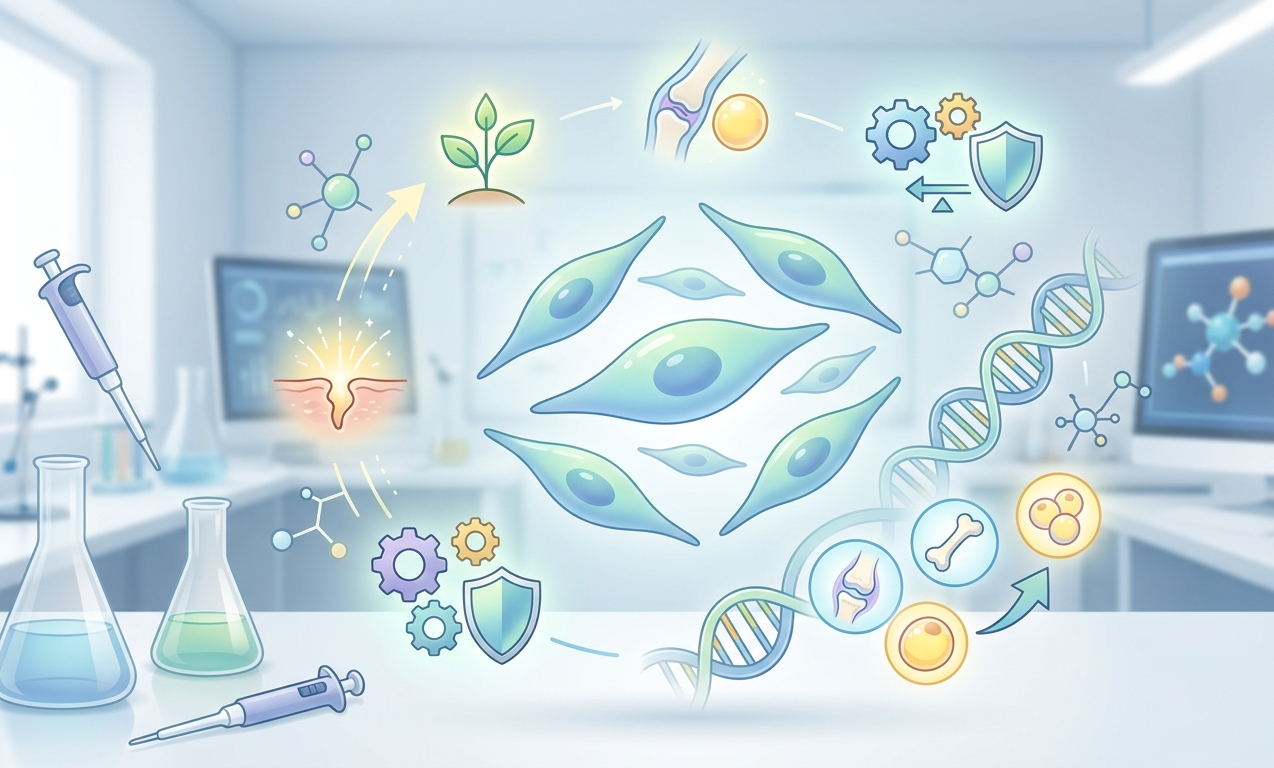
These cells are generally described as fibroblast-like cells. It means they have a spindle-shaped or elongated structure. They show a flattened and stretched appearance. Long, thin projections are often found extending from the cell body. This shape allows MSCs to easily adhere to the plastic surfaces in laboratory cultures. This distinctive trait is one of the most defining features to identify MSCs.
What’s the Actual Cell Size & Dimensions?
MSCs usually range between 15 to 25 micrometers in diameter. However, their size is variable. It can vary depending on the source of cells, culture conditions, and stage of cell growth.
The Unique Nucleus Characteristics of these Cells
Unlike other general cells, the nucleus of MSCs has various distinct features. It is large and centrally located. It is typically oval or slightly elongated in shape. The nucleus of these cells also contains finely dispersed chromatin. This unique nuclear structure reflects the active role of these cells in gene expression and protein synthesis.
Cytoplasm of MSCs
It is moderately abundant. Under microscopic observation, it is lightly stained. The cytoplasm of these cells is rich in various cell organelles. These components support high metabolic and regenerative activity.
Surface Markers of these Cells
There are specific surface markers that complement the physical appearance of MSCs. These are normally CD73, CD90 and CD105. Nevertheless, the surface marker has not CD34 and CD45. These characteristics differentiate MSCs with other types of cell, such as hematopoietic stem cells, and others.
How do MSCs Grow in Laboratory Culture?
When cultured in laboratory conditions, these cells strongly adhere to the plastic surfaces and form colony-forming units. The overall growth is a uniform and spindle-shaped monolayer. However, the cell morphology may exhibit changes over time.
What Morphological Changes Occur During Cell Differentiation?
As MSCs differentiate into specific cell types, their morphology changes significantly. First, osteogenic differentiation occurs in which cells become more cuboidal. Then, the chondrogenic differentiation occurs where the cells get a rounded appearance. Last but not least is the adipogenic differentiation. During this phase, the lipid droplets are accumulated. All these changes are essential indicators of a cell’s successful differentiation.
Key Features of MSCs
Apart from the structural traits, MSCs also stand out for their biological functions. They have self-renewal properties and can easily replicate for extended periods without losing their unique traits. MSCs are also multipotent. They can differentiate into multiple cell types.
Immunomodulation is another differentiation feature. These cells are powerful to control the immune and diminish inflammation. Another property of MSCs is their unique paracrine activity. They secrete growth factors and signaling molecules to enhance healing.
A Sneak Peek into the Overall Working of Stem Cells
There are several mechanisms by which these cells contribute to healing. First is differentiation. They replace damaged cells by transforming into required tissue types. Second is the secretion of bioactive molecules. MSCs release cytokines, growth factors, and extracellular vesicles. Third is the immune regulation. These cells suppress harmful immune responses in different autoimmune diseases. Lastly, the anti-inflammatory effects of these cells. MSCs are potent in reducing inflammation in chronic diseases.
What is the Role of Mesenchymal Cells in Stem Cell Therapy?
These are one of the most widely used cell types in stem cell therapy. They stand out for their adaptability and safety. The following are some of the major roles performed by MSCs in stem cell therapy:
1. Tissue Repair & Regeneration
MSCs are actively involved in the process of repairing damaged tissues. Being introduced into the body, they migrate to the injured area where they differentiate into functioning cells. These cells generate local repair processes, which are useful in the treatment of degenerative diseases and injuries.
2. Immunomodulation in Therapy
It is one of the most critical roles of these cells in therapy. MSCs are competent enough to regulate the immune system. They suppress overactive immune responses and prevent tissue damage caused by inflammation. These cells also stand out for supporting immune tolerance. This approach is highly beneficial in autoimmune diseases, organ transplantation, and chronic inflammatory conditions.
3. Paracrine Signaling & Healing
These cells release bioactive molecules that influence the surrounding cells. It is one of the most crucial decision-making phases. The secretions promote angiogenesis and enhance tissue repair. Paracrine signaling reduces cell death and serves as a major contributor to the therapeutic effects.
4. Homing Ability
MSCs have a unique ability to home to the sites of injuries or inflammations. Once administered into the body, they travel through the bloodstream. Then detect chemical signals from damaged tissues and accumulate at the target site. This targeted action improves treatment efficiency.
5. Anti-Fibrotic Effects
The cells aid in the suppression of fibrosis, the development of scar tissue. These cells suppress fibroblast hyperactivity and enhance normal tissue regeneration. This process is quite beneficial in liver, lung and kidney illnesses.
6. Significant Role in Personalized Medicine
These cells are highly used in patient-centric therapies. In autologous therapy, cells are derived from the patient. This reduces rejection risk and enhances the process compatibility and outcomes.
Some Renowned Clinical Applications of MSC Therapy
These cells are used in a wide range of medical conditions. From orthopedic diseases to cosmetics and skin applications, these cells-based treatment is highly recommended for promising results. Whether you have osteoarthritis, bone fractures, a heart attack, spinal cord injury, CNS stroke, lupus, liver cirrhosis, or any other disorder, this advanced-grade therapy is a go-to option.
A Quick Glimpse of the Procedure of MSC Therapy
First, the cells are collected from bone marrow, fat, or umbilical cord. Then, they are isolated and processed in the laboratory for purification. Next is the step of expansion. At this point, the cells increase in numbers.
Once they are expanded, clinicians administer them into the body via injection or IV infusion. When all these steps are performed, professionals continuously observe the patient’s response and take prompt action if needed.
Why Choose MSC Therapy? – What are the Benefits?
The process is minimally invasive and has the lowest risk of immune rejection. The method has versatile applications. It promotes natural healing and reduces a patient’s reliance on medications.
The future is highly promising. Genetic modification for enhanced performance is expected. Clinical trials will be expanded further. This makes the process highly accessible worldwide. In Pakistan, the therapy is also gaining attention with the passage of time. People are now becoming more aware of the medical advancements. They look for alternative treatment options that reduce the need for international medical travel.
Final Verdict
MSCs are changing the future of contemporary medicine. Their unique morphology, biological properties, and therapeutic capabilities make them one of the most powerful tools in regenerative healthcare. Their spindle-like appearance and their capacity to repair tissues and control the immune system make MSCs a universal answer to numerous challenging issues in medicine.
They not only contribute to the evolution of stem cell therapy but are the cornerstone of it, making it innovative and enhancing patient outcomes. With research continuously evolving, mesenchymal stem cells will become a foundation of medical therapy in the future, providing a way of safer, effective, and sustainable medical solutions.