


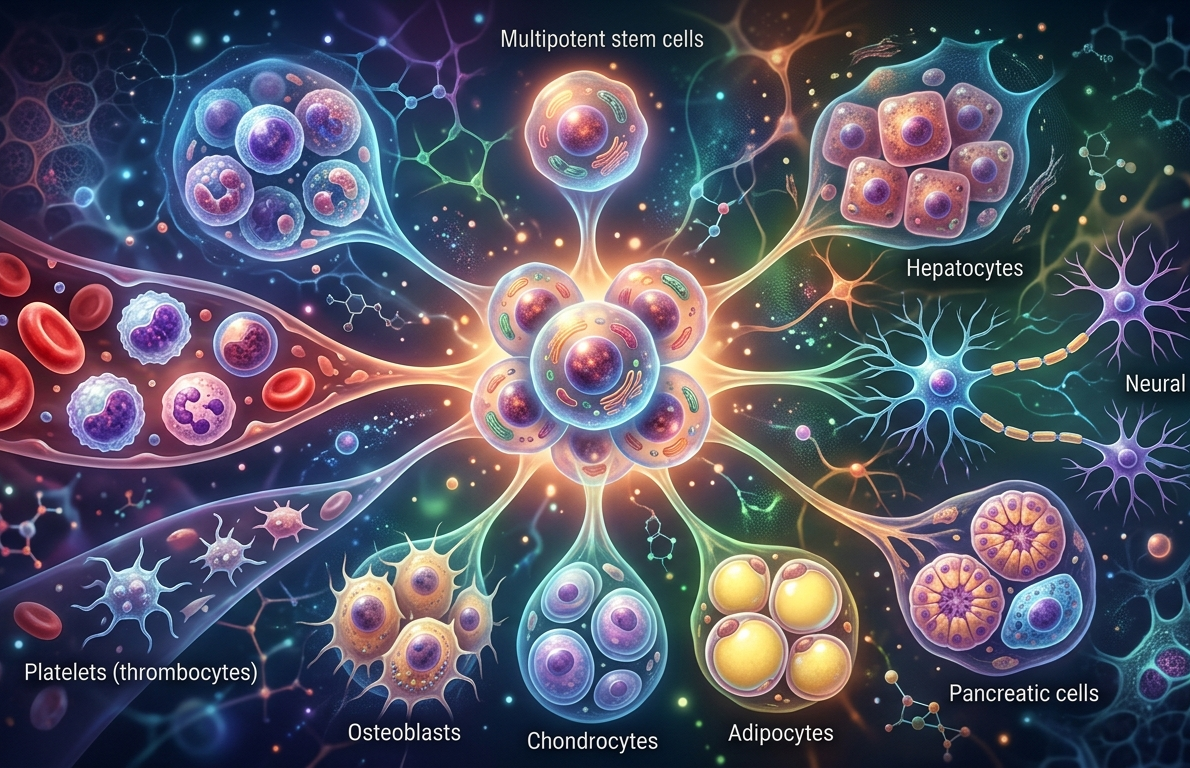
Stem cells are the master cells of the body. They are highly used in regenerative medicine. These cells are categorized into different types. Among them are the multipotent stem cells. They are among the most famous types, standing out for their practicality and clinical relevance in medicine. These are the adult stem cells that can form almost any tissue.
Multipotent stem cells are more specialized. They are potent enough to develop into multiple cell types, but within a specific lineage. Though considered a limitation, it’s one of the biggest strengths of these cells. It makes them safer and highly effective in different therapies.
As stem cell therapy is rapidly gaining popularity, multipotent stem cells are high in demand. In case you are interested in learning more about these cells, this article is for you. It talks about the mechanism and sources of these cells along with their types and uses. Let’s begin.
Multipotent Stem Cells, in a Nutshell
They are adult stem cells that can develop into a number of different cell types within a given tissue or lineage. They are an integral component of the body’s repair mechanism and are key to tissue homeostasis and regeneration.
The focal point is that these cells can fix multiple issues, but within their specified department. For example, the blood stem cells can produce different blood cells. Bone stem cells have the potential to produce bone or cartilage.
Unique Features of these Cells
The more practical breakdown of the distinct features of multipotent stem cells includes their self-renewal ability. The cells can divide and reproduce themselves over time. This ensures a continuous supply for tissue repair. The next is their lineage-specific differentiation. Multipotent stem cells can only generate cells related to their tissue of origin.
Another unique feature is their tissue residency. It’s one of the most interesting features. Multipotent stem cells reside in specific organs but remain inactivated until required for tissue repair. Last but not least, the controlled behavior of multipotent stem cells makes them a go-to option in regenerative medicine. Their limited differentiation reduces risks like tumor formation. This makes them safer for therapies.
Top Sources for Multipotent Stem Cells
There are many sources for multipotent stem cells. The major ones are bone marrow, adipose tissue, umbilical cord, brain tissue, and skin. Bone marrow is rich in HSCs and MSCs. Adipose tissue is easily accessible via liposuction and yields stem cells in higher amounts. Umbilical cord blood is collected at birth. It’s highly potent and is a hub of youthful stem cells.
Brain cells contain neural stem cells. They are important for neurological repair. Skin and epithelial tissue are great sources for the continuous renewal of stem cells in the body.
A Brief Overview of the Major Types of Multipotent Stem Cells
HSCs
They are located in bone marrow and can give rise to all blood cells. These are the most well-known and widely used type of stem cell therapy in regenerative medicine today.
MSCs
They are derived from bone marrow, fat and umbilical cord. They can readily differentiate into bone, cartilage, fat and muscle. MSCs are commonly used in bone and regenerative medicine therapies.
NSCs
These cells are found in the brain and spinal cord. They generally divide to form neurons and supportive cells. NSCs can be used in stem cell therapies for Parkinson’s disease and spinal cord injuries.
Epithelial Stem Cells
They sustain the lining and skin tissues. These cells have rapid regeneration capability. They are used for burn and skin transplants.
Muscle Stem Cells
These cells are also called the satellite cells. They repair damaged muscle fibers and are essentially used for recovery after injury.
Check Out the Working of Multipotent Stem Cells
It’s essential to know the cells’ mechanism of action to better understand them. Multipotent stem cells generally follow three main mechanisms to heal the body and provide promising results. First is differentiation. These cells transform into the specific cells needed for repair. Second is paracrine signaling. The multipotent stem cells release growth factors and cytokines to stimulate healing without direct transformation. Third is immunomodulation. The cells regulate immune responses and reduce inflammation. That’s why these cells are highly useful in autoimmune diseases.
A Few Major Clinical Applications of Multipotent Stem Cells
These cells are highly used in treating blood disorders and cancers. They are one of the go-to options in orthopedic treatments. The most common examples include cartilage repairment and bone regeneration.
These cells also play a major role in treating various neurological disorders. They are highly used in treating spinal cord injuries and stem cell therapy for Parkinson’s disease. Though they are still under research, the future is highly promising.
In different cardiovascular diseases, these cells are highly recommended to repair heart tissue after heart attacks. They also help promote blood vessel formation. They are also a go-to treatment option for autoimmune diseases, such as Lupus and stem cell therapy for Arthritis. They suppress harmful immune responses and promise a healthier life for patients.
Multipotent stem cells also stand out for faster tissue regeneration and reduced scarring. They are highly effective in wound healing and burns treatment. Last but not least is fertility and reproductive medicine. The cells’ emerging use in ovarian and testicular repair is highly visible.
Multipotent vs Pluripotent Stem Cells
Feature | Multipotent | Pluripotent |
Range | Limited | Almost unlimited |
Safety | High | Moderate risk |
Ethical Issues | Minimal | Significant |
Clinical Use | Established | Mostly experimental |
Role in Regenerative Medicine
Multipotent stem cells are central to regenerative medicine, which aims to repair or replace damaged tissues. They are used in tissue engineering, organ repair research, and various drug testing models.
They are essential in modern therapies because of their ability to respond to injuries and regenerate tissues at the cellular level.
The Current Status of Multipotent Stem Cells in Pakistan
Stem cell research is growing at a large scale in Pakistani universities and medical institutes. Private clinics are offering regenerative therapies at a broader spectrum. However, the limited regulations, high treatment costs, and lack of public awareness serve as the major obstacles in the field.
Innovative Steps Contributing to the Lasting Future Trends
Exosome therapy and gene editing are the renowned innovations in the field. Creating tissues and organs with 3D bioprinting is another famous innovation. The use of personalized medicine for individual patients is also a major development.
Let’s Conclude
One of the most realistic opportunities and promising areas of the modern world of medicine is the concept of multipotent stem cells. Their ability to regenerate tissues, immune reactions and facilitate healing makes them invaluable in the management of a wide array of diseases.
They are safer, more specific, and more practical in the real world, though, as of yet, they are not as pluripotent as the pluripotent stem cells, and hence the basis of the current regenerative therapies. As research and technological advancements continue, multipotent stem cells will transform the world of healthcare not just on the global platform, but also in the emerging medical facilities like in the case of Pakistan.
FAQs
Why are multipotent stem cells safer in comparison to pluripotent stem cells?
They are said to be safer to use compared to pluripotent stem cells because of fewer cases of tumors.
Are stem cell therapies legal in Pakistan?
A few of them are lawful, yet so many are still being studied. So, never neglect to check the credibility of clinics.
What is the duration of the results of the therapy?
It is determined by the condition and type of treatment.