



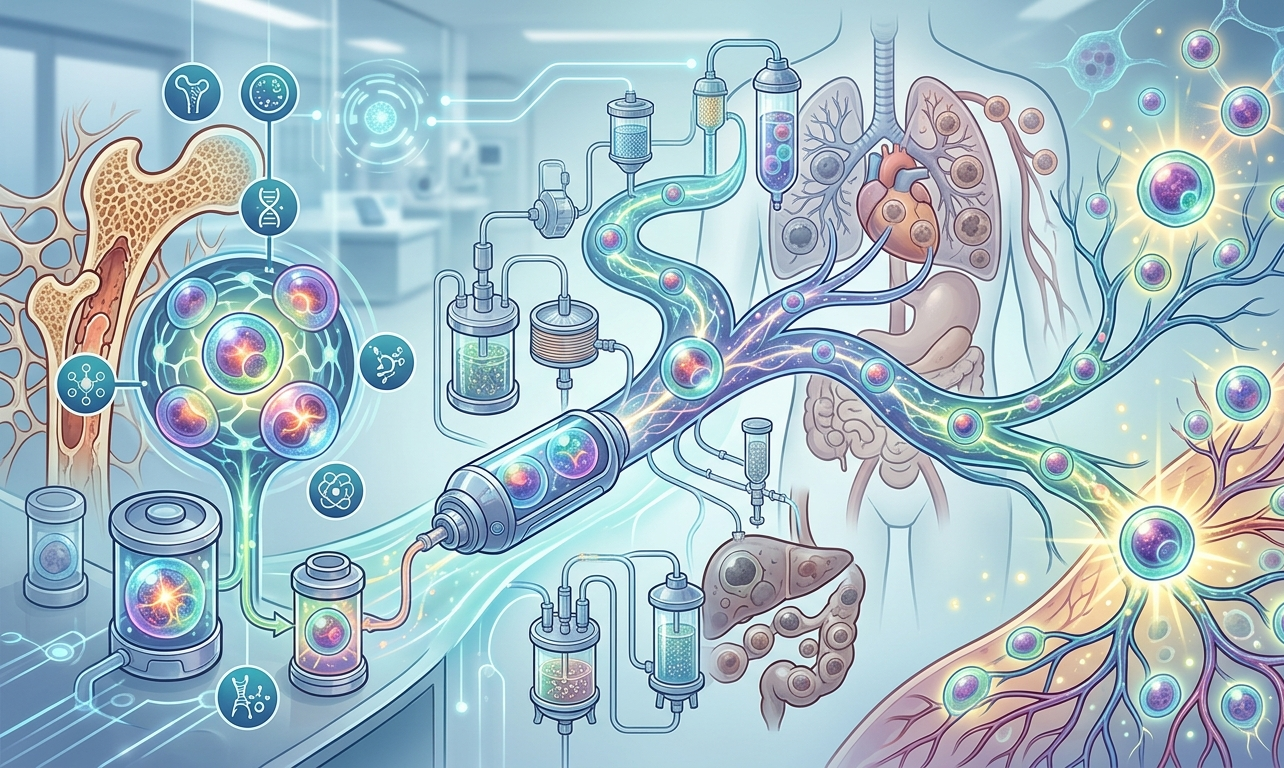
Medical sciences have progressed a lot in the past few decades. Stem-cell-based treatments are the remarkable innovations of the current era. Among these treatments, stem cell transplant stands out as a life-saving procedure. Many cancer patients in Pakistan and all over the globe have achieved promising results from this advanced-grade treatment method.
The transplant is also quite successful in treating patients with various blood disorders and immune system diseases. That’s the reason you must have a detailed understanding of it. You should be aware of what this transplant is, how it is done, what its results are, its merits, and its differences with stem cell therapy. This is an elaborate manual that strives to enlighten all these. We will start and explain all these in detail.
A Short Introduction to Stem Cell Transplant
It is a popular medical procedure of the modern era. In this method, the damaged or diseased bone marrow is totally replaced with healthy stem cells. That’s why the treatment is also known as a bone marrow transplant. The nutritious stem cells are highly useful.
Once they form, they aid in the production of various blood cells in the bone marrow. We know that a normal bone marrow is the source of production of RBCs, WBCs and platelets in a normal human body. Therefore, in case a patient is having leukemia, lymphoma or aplastic anemia, transplanting with stem cells is the best way to go.
Divisions of the Types of Stem Cell Transplants
Primarily, there are three types of stem cell transplants.
|
Stem Cell Transplant Process
It’s a little complex and has various steps. This is the reason why the transplants are normally carried out in special hospitals with the care of qualified medical personnel. The process is described below.
Pre-Transplant Evaluation of the Patient
Before starting the process, doctors assess the patient’s condition. They conduct a thorough physical and laboratory assessment to determine whether a patient is a perfect fit for the treatment or not. The blood tests, imaging scans, and organ function tests are performed. For organ function tests, doctors check for the LFTs, RFts, cardiac markers, lipoproteins, and more.
Stem Cells Collection & Accumulation
After evaluation, the stem cells are collected depending on the types of transplants. Peripheral blood stem cells are collected using a machine. The method is called apheresis. Another professional technique is bone marrow harvesting. In this, the stem cells are directly extracted from the bone marrow under anesthesia. Last but not least is cord blood collection. Here, the stem cells are collected at birth and stored in cord blood banks.
Performance of Conditioning Therapy
This is one of the most critical steps of the treatment. Here, the patients undergo high-dose chemotherapy and sometimes radiation therapy. This step aims to destroy diseased cells, especially the cancerous cells. Conditioning therapy is also potent in suppressing the immune system to prevent rejection. It is best to make space for the production of new stem cells.
Infusion of Stem Cells
The collected stem cells are then infused into the patient’s bloodstream. Usually, an IV line is used for the infusion. The process is similar to the blood transfusion method. The infusion process is also painless, as no surgery is involved at this step.
Engraftment of Stem Cells & the Start of the Recovery Phase
After infusion, stem cells travel to the bone marrow and start producing new blood cells. This process is called engraftment and usually takes 2-4 weeks. During this period, patients are highly vulnerable to infections and require antibiotics, isolation care, and blood transfusions if needed.
Factors on Which the Success Rate of Stem Cell Transplant Depends
It depends on the patient’s age and overall health status. The type of disease also contributes a lot to determining the success rate of the treatment. Disease stage is also one of the most important factors. Donor match quality also has a significant importance in this regard. Last but not least, the type of transplant performed is also potent enough to figure out the success rate of the transplant.
Some Positive Results Often Obtained After Stem Cell Transplants
Most of the patients usually experience a complete remission as a result of transplants. They get a restoration of healthy bone marrow. They also find a significant improvement in their immune system functionality. The process also ensures a long-term survival rate in the patients after treatment. Autologous transplants are more helpful than allogenic ones. They have higher success rates. Moreover, the leukemia patients are observed to have a survival rate ranging between 40 to 70%.
Some Major Complications that May Arise as a Result of the Treatment
The transplants are life-saving. However, they may carry some potential risks, such as graft-versus-host diseases, infections, organ damage, and relapse of diseases.
Stem Cell Therapy Introduction
A stem cell transplant is not referred to as stem cell therapy. They are quite the opposite. The therapy does not always need to substitute the bone marrow as it is with transplants. It is a process that involves repairing, regenerating or replacing the damaged body tissues. The most common type of stem cell therapy is used in diabetes, infertility, kidney diseases, and so on.
Stem Cell Transplant vs Stem Cell Therapy – The Major Differences
|
In other countries such as Pakistan, the transplants of stems are becoming more common because of the developments of medical infrastructure, supply of skilled experts, and the growing awareness among the citizenry. However, the challenges of high cost, limited donor registries, and lack of awareness are still in place. In spite of these difficulties, numerous patients are now successfully going through transplants and coming out successfully.
Stem Cell Transplants’ Bright Future
Continuous studies of safer conditioning therapies, reduced complications (including GVHD), improved donor matching techniques, gene editing, and personalized medicine will result in making stem cell transplants a viable treatment option in the future. Researchers also consider the ways of combining transplant techniques with regenerative treatments in order to enhance outcomes.
Summarization Thoughts
A stem cell transplant is one of the most successful forms of treatment to date in modern medical practice, and is offering hope to patients with severe and life-threatening conditions. The process is complicated and risky. However, its possible advantages are wide-ranging. It is important to know the difference between a stem cell transplant and stem cell therapy.
Both employ the special abilities of the stem cells. They have completely different medical applications, with one being used to replace damaged systems in the body, and the other to regenerate damaged tissues. Medical science will make stem cell-based treatments even more efficient, more available and safer.