
Pluripotent Stem Cells: Types, Uses, Benefits & Research
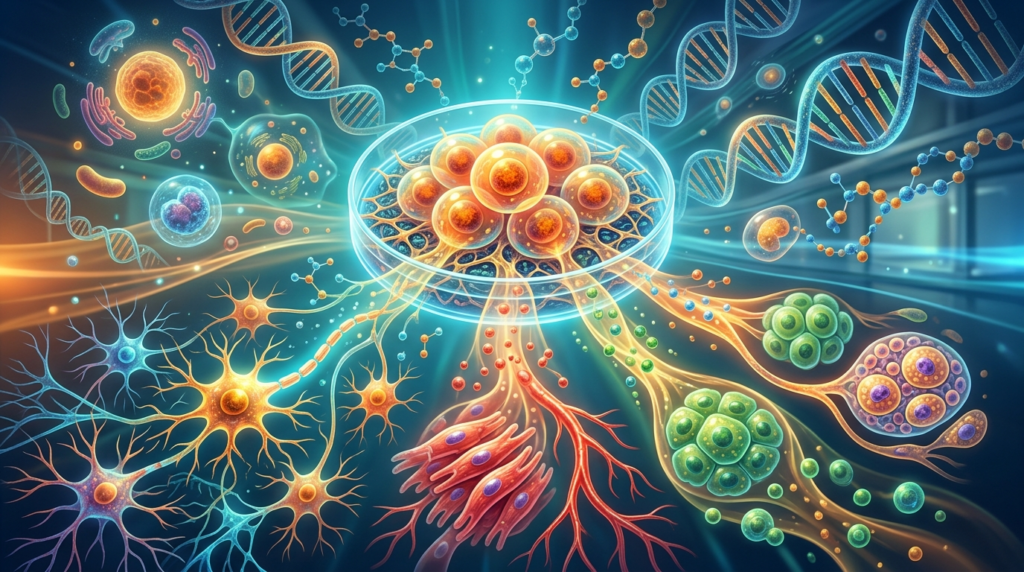
Stem cells are undifferentiated cells found in the body, and they come in several types. One of their most important types is Pluripotent Stem Cells. They are among the most powerful and promising tools in modern biomedical science, standing out for their unique ability to differentiate into almost all cell types in the human body.
At Njinsky Medical Centre, these cells are used to ensure safe treatment and promising results. Recent advances in stem cell research have transformed our understanding of human development and opened new possibilities for treating previously untreatable diseases. That is why understanding PSCs is so important.
This article discusses these cells in depth. Read on to explore the function, types, sources, applications, and other relevant information about these cells.
Introduction to PSCs
As stem cells, they are undifferentiated cells with the ability to develop into other cell types. Pluripotent stem cells can give rise to cells of all three primary germ layers:
- Ectoderm
- Mesoderm
- Endoderm
Skin cells and neurons are derived from the ectoderm. Bone, muscle, and blood cells originate from the mesoderm. The endoderm gives rise to liver cells, pancreatic cells, and similar cell types.
PSCs cannot form extra-embryonic tissues such as the placenta. This broad differentiation potential makes them extremely valuable in both research and clinical applications. They essentially serve as a biological “blank slate,” capable of becoming specialized cells under the right conditions, such as:
- Specific growth factors and signaling molecules.
- Controlled culture environment.
- Extracellular matrix support.
- Time-dependent stimulation.
The Most Important Properties of PSCs
PSCs have a number of distinguishing characteristics:
1. Self-Renewal
These cells can divide indefinitely, which enables scientists to grow large numbers of cells in the laboratory.
2. Differentiation Potential
They are highly versatile and can differentiate into almost any type of cell in the human body.
3. Genetic Stability
Under well-controlled culture conditions, PSCs can maintain a stable genome across many cell divisions. However, prolonged culture may introduce genetic and chromosomal abnormalities, so their genomic stability must be monitored regularly.
4. High Proliferation Rate
They proliferate rapidly, a feature that is valuable in both research and treatment.
Pluripotent Stem Cell Types
There are two major subtypes of PSCs.
1. Embryonic Stem Cells (ESCs)
They are derived from the inner cell mass of a blastocyst. The blastocyst is an early-stage embryo that typically forms 5–7 days after fertilization.
Features:
- Naturally pluripotent
- High differentiation capacity
- Considered the “gold standard” for pluripotency
2. Induced Pluripotent Stem Cells (iPSCs)
These stem cells are adult cells (like skin or blood cells) that have been genetically reprogrammed back to a pluripotent state.
Features:
- Do not require embryos
- Patient-specific (lowers immune rejection)
- Properties similar to those of embryonic stem cells.
Feature | Embryonic Stem Cells (ESCs) | Induced Pluripotent Stem Cells (iPSCs) |
Definition | Derived from the inner cell mass of a blastocyst embryo | Adult cells genetically reprogrammed into a pluripotent state |
Source | Early-stage embryos | Adult tissues such as skin or blood cells |
Pluripotency | Naturally pluripotent | Artificially induced pluripotency |
Differentiation Ability | Very high differentiation capacity | High differentiation capacity similar to ESCs |
Immune Rejection Risk | May have a higher risk of immune rejection | Patient-specific cells may reduce immune rejection risk |
Research Importance | Considered the “gold standard” for pluripotency research | Widely used for personalized medicine and disease modeling |
Clinical Potential | Extensively studied in regenerative medicine research | Strong potential for patient-specific regenerative therapies |
Key Advantage | Natural pluripotency and strong developmental potential | Personalized approach without embryo involvement |
Main Limitation | Ethical and regulatory concerns | Genetic reprogramming complexity and ongoing safety evaluations |
The Science Behind Pluripotency
Pluripotency is controlled by a network of genes and transcription factors that keep the cell in its undifferentiated state. The most important transcription factors are:
- Oct4
- Sox2
- Nanog
These factors work together to:
- Suppress differentiation signals
- Maintain self-renewal
- Activate the genes required for pluripotency.
To direct PSCs to differentiate into particular cell types, scientists regulate signaling pathways using growth factors, chemicals, and specific environmental conditions.
Process of Pluripotent Stem Cell Injection into the Human Body
The clinical and research use of pluripotent stem cells is a tightly monitored and well-regulated process. Because these cells can differentiate into many cell types, they must be prepared carefully and in accordance with all safety measures. The process remains largely experimental in many settings and is generally carried out within clinical studies approved by the appropriate authorities. The steps involved are outlined below.
1. Patient’s Condition Evaluation
Whenever a stem cell-based intervention is considered, a comprehensive medical evaluation is undertaken. During this step, the following protocols are followed:
- A thorough evaluation of the patient’s medical history and current health status.
- Assessment of disease severity by diagnostic imaging and laboratory tests.
- Assessment of stem cell-based approaches for suitability.
2. Preparation of Stem Cells
Once the patient is found eligible for treatment, the pluripotent stem cells are prepared under strict laboratory conditions. The cells are either cultured directly or generated by reprogramming adult cells (induced pluripotent stem cells). This step takes place while following the protocols given below:
- Cells are grown and multiplied in a controlled lab environment.
- Quality-control tests are conducted to ensure purity, stability, and safety.
- Depending on the treatment goal, stem cells are directed to become a specific type of cell.
3. Differentiation (If Required)
PSCs are in many cases directed to become a specific cell type prior to their injection. Cells can be differentiated into retinal, neural, cardiac, or hepatic cells. Controlled signaling factors are used under laboratory conditions. This minimizes the risk of uncontrolled cell behavior following administration.
4. Preparation for Administration
The stem cells are prepared for clinical use before being injected.
- Cells are suspended in a sterile medical solution.
- Dosage is carefully calculated based on treatment protocol.
- A final safety screening is done to confirm sterility and viability.
5. Injection / Delivery to the Body
The method of cell delivery varies depending on the condition being treated and the treatment plan. In many cases, intravenous (IV) infusion is used: cells are injected into the bloodstream, typically through a vein in the arm, so they can travel throughout the body.
In other cases, stem cells are delivered locally, injected directly into the affected tissue or organ (such as the eye, a joint, or a muscle) rather than into the circulatory system. Precise placement and targeted delivery techniques are used to ensure accuracy. The aim is to help the cells reach the damaged area and begin signaling to support repair.
6. Post-Procedure Monitoring
Patients are carefully followed after stem cell administration for efficacy and safety. Detailed observation is carried out to look for any side effects or immune reactions. Follow-up appointments and diagnostic testing are performed as needed. Regular monitoring of tissue response and functional improvement increases the chances of an effective treatment.
Sources of Pluripotent Stem Cells
- Early Embryos
Embryonic stem cells are obtained from blastocysts.
- Adult Somatic Cells (in case of iPSCs)
Certain cells, such as fibroblasts (skin cells), can be reprogrammed into pluripotent cells through the introduction of specific genes.
- Umbilical Cord and Placental Tissue (Indirect Use)
These tissues are normally used as sources of multipotent cells, but they can sometimes be used to generate PSCs through reprogramming.
Methods of Derivation and Culture
Isolation of ESCs
The cells are first extracted from the inner cell mass of the blastocyst and then grown under controlled laboratory conditions.
Reprogramming for iPSCs
Adult cells are exposed to specific transcription factors. This process “resets” the cell to a pluripotent state.
Culture Conditions
The cells are then cultured in the laboratory. At Njinsky Medical Center, ISO biosafety level 2 labs are used. They are maintained under specific temperature, pH, and nutrient conditions.
New Developments in Pluripotent Stem Cell Research
Pluripotent stem cells are being widely explored in regenerative medicine because of their ability to develop into many different types of cells in the human body. Researchers are investigating their potential use in repairing damaged tissues, supporting organ function, and improving recovery in several chronic and degenerative conditions.
While many applications are still under clinical investigation, pluripotent stem cells continue to attract attention for their possible role in future personalized and regenerative therapies.
Eye Diseases
Researchers are studying pluripotent stem cells for their potential role in treating various eye disorders that involve retinal or optic nerve damage.
Conditions Being Explored
- Macular degeneration
- Retinal degeneration
- Optic nerve damage
- Corneal injuries
- Retinitis pigmentosa
Potential Goals of Therapy
- Support regeneration of retinal cells
- Improve visual function
- Slow disease progression
- Repair damaged eye tissues
Erectile Dysfunction (ED)
Pluripotent stem cells are also being researched for erectile dysfunction, especially in cases related to aging, diabetes, vascular problems, or nerve injuries.
Areas of Research
- Blood vessel regeneration
- Nerve repair support
- Tissue healing and recovery
- Improved circulation in affected areas
Potential Benefits Under Investigation
- Enhanced tissue function
- Support for natural healing processes
- Improved vascular health
Infertility
In reproductive medicine, researchers are exploring how pluripotent stem cells may help support fertility-related treatments.
Conditions and Concerns Being Studied
- Ovarian dysfunction
- Testicular damage
- Age-related fertility decline
- Reproductive tissue injuries
Research Objectives
- Support reproductive tissue regeneration
- Improve ovarian and testicular function
- Explore future fertility restoration possibilities
Liver Cirrhosis
Liver cirrhosis is another major condition being explored through stem cell-based regenerative approaches.
Potential Areas of Investigation
- Liver tissue regeneration
- Reduction of inflammation
- Support for liver repair mechanisms
- Improvement in liver function
Conditions Commonly Associated
- Chronic liver disease
- Alcohol-related liver damage
- Fatty liver disease complications
- Viral hepatitis-related cirrhosis
Other Health Conditions Being Explored
Pluripotent stem cells are also being investigated in several additional medical fields.
Neurological Disorders
- Parkinson’s disease
- Alzheimer’s disease
- Spinal cord injuries
- Stroke recovery
Orthopedic Conditions
- Osteoarthritis
- Cartilage damage
- Tendon injuries
- Bone regeneration research
Autoimmune Diseases
- Multiple sclerosis
- Lupus
- Rheumatoid arthritis
Cardiac Conditions
- Heart tissue repair
- Recovery after cardiac injury
- Support for cardiovascular function
Kidney Diseases
- Chronic kidney disease
- Kidney tissue damage
- Renal function support research
The Benefits of Pluripotent Stem Cells
Versatility
One of the most important characteristics of pluripotent stem cells (PSCs) is their remarkable versatility. These cells have the ability to develop into almost any type of specialized cell found in the human body.
Key Highlights
- Can transform into multiple cell types including nerve, heart, liver, retinal, muscle, and skin cells
- Widely explored in regenerative medicine and tissue repair research
- May support studies related to organ regeneration and damaged tissue replacement
- Useful in research involving neurological, cardiac, liver, kidney, and eye disorders
- Helps scientists study cellular development and disease progression
Unlimited Supply
Another major advantage of pluripotent stem cells is their ability to self-renew for extended periods under controlled laboratory conditions.
Key Highlights
- Capable of continuous cell division and replication
- Can produce large quantities of stem cells for research purposes
- Provides a potentially long-term source of cells for regenerative studies
- Supports repeated laboratory testing and disease modeling
- May contribute to the future development of scalable regenerative therapies
Research Value
Pluripotent stem cells are also highly valuable in scientific and medical research because they help researchers better understand human development and disease mechanisms.
Key Highlights
- Helps scientists study early human development processes
- Used to create disease-specific cellular models in laboratories
- Assists in understanding genetic and degenerative disorders
- Supports drug development and toxicity testing research
- Enables researchers to evaluate treatment responses at the cellular level
- Plays an important role in regenerative medicine and biomedical innovation
Comparison with Other Stem Cells
Feature | Pluripotent Stem Cells | Multipotent Stem Cells | Totipotent Stem Cells |
Differentiation Ability | All body cell types | Limited cell types | All cell types + placenta |
Source | Embryos, reprogrammed cells | Adult tissues | Fertilized egg |
Ethical Issues | Moderate to high | Low | High |
Clinical Use | Emerging | Established | Experimental |
Conclusion
Pluripotent stem cells represent a biomedical revolution. This makes them invaluable for studying human biology, developing novel treatments, and potentially treating a wide range of diseases. Although challenges remain, including ethical concerns, the risk of tumor formation, and technical constraints, ongoing research continues to work toward overcoming these problems.
Induced pluripotent stem cells, in particular, have been a major achievement, easing ethical concerns and making personalized medicine possible. As science progresses, pluripotent stem cells are likely to play a central role in shaping the future of healthcare by helping to bring experimental research into mainstream clinical care. Their potential is immense, and responsible innovation offers an opportunity to redefine how we treat disease, repair the body, and extend human health.

Njinsky Medical Centre
At Njinsky, we specialize in cutting-edge stem cell treatments to heal untreatable ailments, regenerate cells, and revitalize the body and brain. With expert research and care, we redefine age, disease, and pain, offering a healthier, pain-free future through regenerative medicine.
Contact Information
Advantages and Limitations of Stem Cell Therapy
admin
June 30, 2026