

How Long Does Stem Cell Therapy Take to Show Results?
People in Saudi Arabia and all over the globe are increasingly turning to advanced regenerative stem cell therapy. As demand continues to grow, one common question is how long the treatment takes to show results. As the process focuses on healing rather than just managing symptoms, the answer is not as simple as you think.
It does not deliver immediate results in the way that traditional symptomatic treatments do. This advanced process works by activating the body’s natural healing mechanisms. This leads to results developing gradually, often over weeks or months. At Njinsky Medical Centre, stem cell therapies are carried out under expert supervision. From stem cell treatment for arthritis and autism to infertility and erectile dysfunction, a proper timeline is followed for each treatment.
This guide offers a sneak peek at the timeline breakdown. Read on to learn about all the influencing factors and the realistic expectations for specific conditions.
A Brief Look at the Working of Stem Cell Therapy
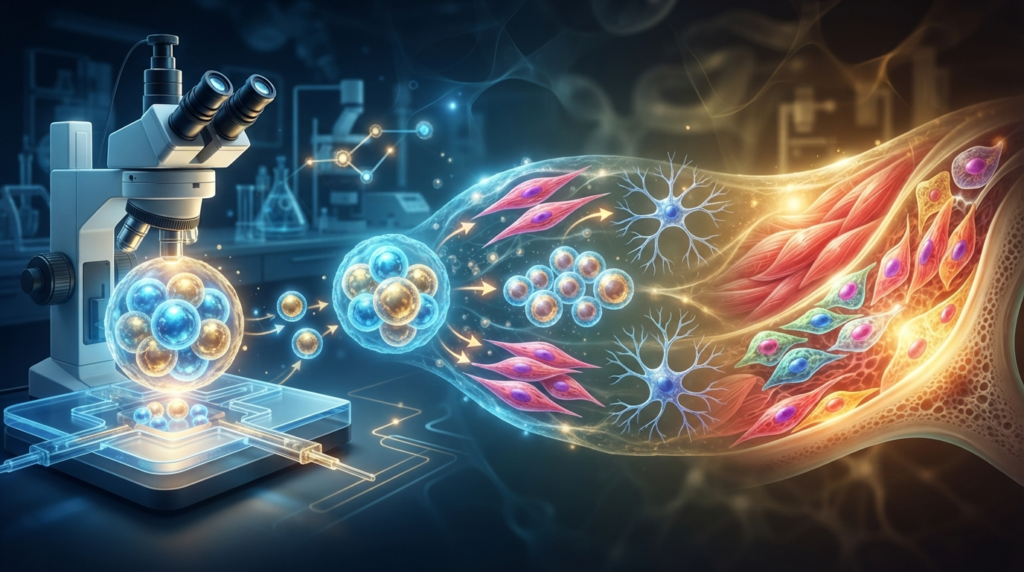
Before answering the question how long does stem cell therapy take to work, it’s important to understand the working of the process. This explains why results take time. Stem cells are no ordinary cells; they are truly unique.
They can transform into other cell types, release growth factors, reduce inflammation, and stimulate tissue regeneration. Stem cell therapy supports the repair and regeneration of damaged tissues at a cellular level. That’s why it’s not an instant fix, improvements happen progressively. It’s a biological process that can’t deliver overnight results.
Typical Healing Duration of Stem Cells
The short answer is that early signs typically start emerging within 2–4 weeks. These include reduced pain and inflammation. The noticeable improvements are usually seen in 1 to 3 months. The significant results are typically observed in 3 to 6 months. However, you have to wait around 6 to 12 months to get the full benefits of this advanced regenerative medicine technique. It’s the normal healing duration of stem cells used in treating damaged tissues.
Phase-by-Phase Recovery Timeline for Regenerative Therapy
Let’s look at each stage in detail so you can understand the recovery timeline for regenerative therapy. This will help you set realistic expectations for how the procedure progresses over time.
1. Day 0 to 7
It’s the time immediately after the treatment. During these days, stem cells are injected or infused into the target area. Cells start communicating with surrounding tissues and anti-inflammatory signals are released. Between day zero to seven, you may feel mild swelling, soreness, slight fatigue, and only minimal visible improvement.
It’s just like planting the seed. The real work happens internally. However, some patients may notice slight, comforting improvements within the first week as inflammation subsides.
2. Weeks 2-4
It is the early healing phase. Whether you take stem cell treatment for diabetes, arthritis, or any other disease, blood flow increases during this stage and inflammation decreases. It’s the time when stem cells begin repairing damaged tissues.
Most patients start noticing initial improvements within 2-4 weeks. Pain or stiffness is reduced during this period. However, patients often feel a surge in energy when systemic treatments are performed. These changes are usually subtle rather than dramatic, but they are meaningful signs of progress.
3. Months 1 – 3
This is where things start getting exciting. It’s the initial improvement phase. During this time the tissue regeneration accelerates and new cells start replacing the damaged ones. Functional improvements become measurable during this stage. You may feel a noticeable pain reduction and improved mobility.
By the end of 3 months, many patients start feeling that the therapy is working. Indeed, it’s the early repair phase. During this time, many patients can carry out their daily routines more easily and comfortably.
4. Months 3-6
It’s the significant results phase. It’s the point where people often start getting the primary results. Three to six months after the stem cell injection, regeneration reaches peak levels. Structural repair becomes more stable. Inflammation is significantly reduced.
Significant pain relief is usually noticed at this phase. Patients notice a significant increase in strength and mobility. Clinical observations suggest that most measurable outcomes occur between 3 to 6 months. For orthopedic conditions (like knee pain or arthritis), this is often when patients experience the biggest transformation.
5. Months 6-12
It’s the full results phase. This is where long-term outcomes become clear. Tissue remodeling completes. New cells integrate fully and healing stabilizes. Here, patients often observe maximum improvement in function.
Sustained pain relief is the most common observation during this stage. Many patients reach their full potential results around 6–12 months after treatment. This improves their quality of life.
6. 1 Year & Beyond
This lengthy span ensures long-term results. Stem cell therapy doesn’t just provide temporary relief; it offers long-lasting benefits as well. 1 to 3 years are commonly considered in many cases. However, 2 to 5 years are also often required in some orthopedic conditions.
It’s important to note that the lasting results mostly depend on many factors. Lifestyle changes, disease severity, and expert follow-up care can make a significant difference to your outcome.
Major Reasons Why Stem Cell Therapy Takes Time
Many patients expect quick results but that’s not how regenerative medicine works.
Here’s why:
1. Cellular Regeneration Is Slow
Your body needs time to:
- Grow new cells
- Replace damaged tissue
- Restore function
2. Healing Happens in Layers
First inflammation reduces, then tissue repairs, then function improves.
3. It Depends on Your Body
Each person heals at a different rate depending on age, health, and immune response.
Factors That Affect How Quickly You See Results
Not everyone experiences the same timeline. Several factors influence how fast stem cell therapy works.
1. Type of Condition
Different conditions respond differently:
- Orthopedic issues: 3–6 months
- Autoimmune diseases: 3–12 months
- Neurological disorders: 6–18 months
- Hair/skin treatments: Weeks to months
2. Severity of the Condition
- Mild damage → Faster results
- Severe degeneration → Slower healing
The more damage your body needs to repair, the longer it takes.
3. Type of Stem Cells Used
- Bone marrow-derived
- Adipose (fat-derived)
- Umbilical cord stem cells
Each type has different potency and healing speed.
4. Age and Overall Health
Younger, healthier individuals typically:
- Heal faster
- Respond better to therapy
5. Treatment Area
- Joints → Moderate timeline
- Organs → Longer timeline
- Skin → Faster visible results
6. Post-Treatment Care
Your results depend heavily on:
- Physical therapy
- Diet and nutrition
- Avoiding strain on treated areas
Condition-Specific Timelines
Let’s break it down further based on common treatment areas.
Orthopedic Conditions (Knees, Joints, Back)
- Early relief: 2–6 weeks
- Noticeable improvement: 2–3 months
- Full results: 6–12 months
Autoimmune Diseases
- Initial response: 1–3 months
- Significant improvement: 3–6 months
- Full immune modulation: up to 1 year
Neurological Conditions
- Early signs: 3–6 months
- Functional improvement: 6–12 months
- Maximum recovery: 12–18 months
Cosmetic Treatments (Skin, Hair)
- Early results: 2–4 weeks
- Visible changes: 1–3 months
- Peak results: 3–6 months
Common Misconceptions About Stem Cell Therapy Timing
“Results should be immediate”
Reality: It takes weeks to months.
“If I don’t see results in a month, it failed”
Reality: Full benefits often take 3–6 months or more.
“It works the same for everyone”
Reality: Every patient responds differently.
How to Maximize Your Results
To speed up and enhance your recovery, follow your doctor’s post-treatment plan. Stay physically active. Maintain a healthy diet. Avoid smoking and alcohol. Attend follow-up appointments. Remember, consistency is key to achieving lasting results from regenerative stem cell therapy.
When Should You Be Concerned?
Contact your doctor promptly if you notice pain that worsens significantly, or any signs of infection such as fever, redness, warmth, or swelling at the treatment site, as these need prompt medical attention. It is also worth checking in with your provider if you see no improvement at all after 3–6 months. That said, gradual, slow progress is normal, so there is usually no need to worry if results simply take time to appear.
Concluding Remarks
How long does stem cell therapy take to demonstrate any results? The straightforward answer is:
- You might experience slight changes within 2–4 weeks.
- Observable changes in 1–3 months.
- Significant results in 3–6 months.
- Full healing may take 6–12 months or more.
Stem cell therapy is not a quick fix; it is a long-term investment in your healing. It takes time, but it can offer meaningful, long-lasting results. The treatment is potent enough to improve your quality of life. Njinsky Medical Centre offers professional-grade stem cell therapies for a wide range of diseases. Opt for personalized treatment plans and enjoy a healthier life.

Njinsky Medical Center
At Njinsky, we specialize in cutting-edge stem cell treatments to heal untreatable ailments, regenerate cells, and revitalize the body and brain. With expert research and care, we redefine age, disease, and pain, offering a healthier, pain-free future through regenerative medicine.
Disclaimer: Results vary and no specific outcome can be promised.
Contact Information
Why Quality Control Matters in Stem Cell Therapy
admin
September 18, 2026