



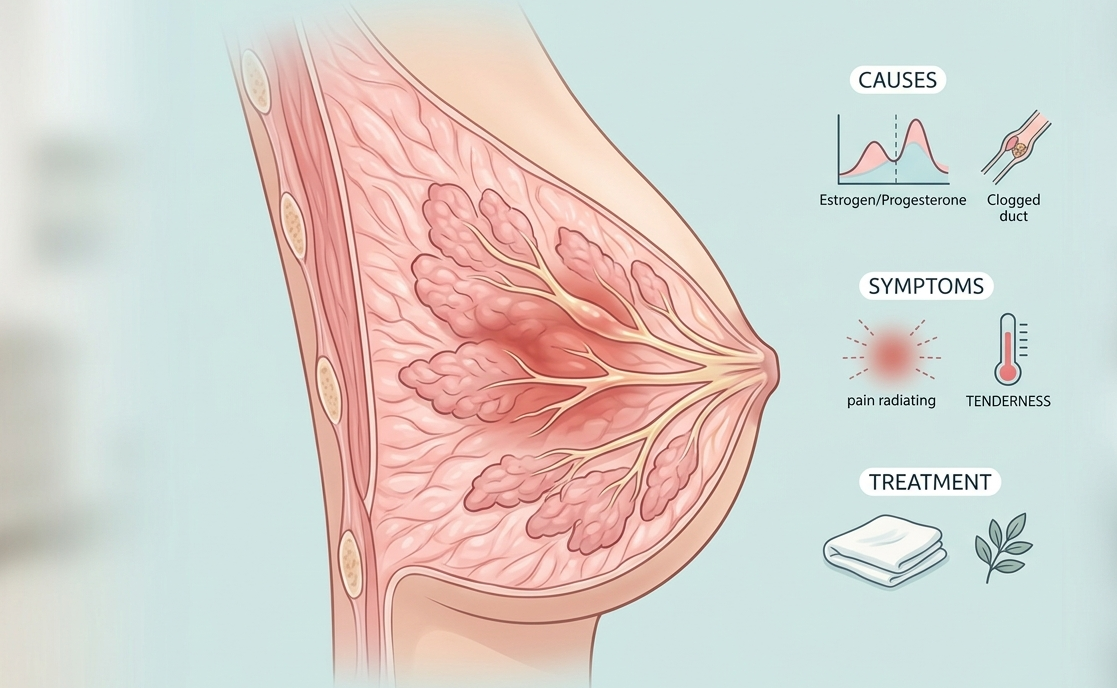
Breast health is important for a person’s well-being. Many individuals face breast changes over time that raise concerns. Breast pain, sensitivity, heaviness or discomfort in one or both breasts are some of the most frequent breast-related concerns.
At Njinsky Medical Centre, we identify breast symptoms that are concerning. Understanding breast tenderness, its symptoms, causes, and available treatments makes it possible to make informed decisions about your breast health. Let’s discuss these in detail.
Breast Tenderness
It is a sensation of discomfort, sensitivity, soreness or pain in the breast tissue. It can occur in one or both breasts and can range from mild sensitivity to severe discomfort that interferes with daily activities.
This condition is frequently associated with hormonal changes, particularly changes in the level of estrogen and progesterone. These hormonal changes can cause swelling and pain in the breast tissue.
Breast tenderness is common in women but it can occur in men as well. Male breast tenderness can result from hormonal imbalance, certain medications, weight gain, or underlying medical conditions. Our specialists at Njinsky thoroughly assess the symptoms of breast issues and determine the cause and appropriate treatment.
Breast Tenderness Symptoms
- Pain or sensitivity in the breast
- Redness or swelling of the breast
- Burning or aching sensations
- Increased pain before menstruation
- Sensitivity or discomfort of the nipple
For some, the tenderness is only present at specific points of the month and for others it can be seen as a constant discomfort. The site of tenderness may also give some clues. Some people will feel pain all over the breast, while others may feel pain in particular regions of the breast.
If breast tenderness is accompanied by new lump, nipple discharge, nipple skin changes or persistent pain, then medical evaluation is recommended.
Breast Tenderness Causes
These are the most common causes of breast tenderness:
1. Hormonal Imbalance
A fluctuation of hormones can cause discomfort of the breast tissue. Hormonal imbalance can happen at any of the following times:
- Puberty
- Menstrual cycles
- Pregnancy
- Breastfeeding
- Menopause
2. Pregnancy and Breastfeeding
Breasts undergo significant changes during pregnancy and breastfeeding. Tenderness can be caused by increased milk production and the associated changes in breast tissue.
3. Certain Medications
Some medications can affect hormone levels and may lead to breast pain, including:
- Hormonal therapies
- Certain antidepressants
- Oral contraceptives (the contraceptive pill)
4. Stress and Lifestyle Factors
Stress can affect hormone balance, which may contribute to breast sensitivity.
Other lifestyle factors that may contribute are:
- Poor sleep
- Excess caffeine intake
- Wearing an uncomfortable bra
5. Underlying Breast Conditions
Sometimes tenderness may be associated with underlying breast conditions such as cysts or infections (for example, mastitis). A medical examination helps to determine the precise cause.
Breast Tenderness in Men
Although breast tenderness is more common in women, men can experience it too. In men, tenderness is often the result of hormonal changes, particularly an imbalance between estrogen and testosterone.
Possible causes include:
- Hormonal changes
- Puberty-related breast development
- Certain medications
- Weight gain
- Certain medical conditions (such as thyroid, liver, or kidney disease)
If a man has ongoing pain, swelling or a lump in his breast, he should see his health care provider.
Male Breast Tenderness Treatment
The treatment varies based on the cause. Njinsky Medical Centre starts treatment with an appropriate assessment. Depending on the cause, treatment options may include:
- Addressing hormonal imbalance
- Reviewing current medications
- Lifestyle modifications
In some cases, surgical options are also offered. A customized treatment plan allows for treatment of the actual cause and not just the symptoms.
Tips to Avoid Breast Tenderness
Managing breast tenderness depends on its underlying cause. Common approaches include:
Using Supportive Bras
A well-fitting, supportive bra helps minimise movement and discomfort, particularly during periods of heightened sensitivity.
Opting for Pain Relief Options
Some people may find it helpful to take over-the-counter pain relief, such as paracetamol or ibuprofen. If the pain persists, medical advice is recommended.
Lifestyle Changes
Some lifestyle modifications that can be helpful:
- Eating a balanced diet
- Managing stress
- Getting regular exercise
- Limiting caffeine intake
Medical Treatment
If the tenderness is due to an underlying medical condition, that condition should be treated. Our experts at Njinsky Medical Centre aim to understand the cause, and suggest the right breast care solution.
Helpful approaches include:
- Wear Comfortable Support
Wear a well-fitting bra that offers sufficient support.
- Maintain Hormonal Balance
Adopting a healthy lifestyle can help keep hormonal balance.
- Apply Warm Compresses
Applying heat can relax the breast tissue and decrease discomfort.
- Track Symptoms
Keeping track of when the tenderness occurs can help identify patterns related to the menstrual cycle or other factors.
- Consult a Specialist
Any ongoing or unusual breast pain should always be assessed by a qualified healthcare provider.
When to See a Doctor
Breast tenderness is usually harmless, but some signs may require medical attention. See a doctor if you experience any of the following symptoms:
- A new breast lump
- Persistent pain that does not improve
- Nipple discharge
- Changes in breast appearance
- Skin changes
- Sudden, unexplained tenderness
- Pain in one specific spot
Early evaluation provides reassurance and helps identify potential concerns at an early stage.
Why Trust Njinsky Medical Centre for Breast Health?
We at Njinsky feel that every breast health concern deserves to be handled with care, professionalism, and compassion. We have a team of experienced professionals who focus on:
- Detailed breast assessments
- Patient-centered consultations
- Advanced diagnostic approaches
- Personalized treatment plans
Conclusive Remarks
Breast tenderness is a frequent symptom and may be experienced for various reasons, including normal hormonal changes, pregnancy and other medical issues.
Understanding the symptoms, causes, and treatment options for breast tenderness makes it easier to take control of your health. If you continue to experience discomfort or are concerned about changes in your breasts, it is best to seek professional advice.
Reach Out to Njinsky Medical Centre Today!
You deserve the best care and attention for your breasts. Get connected with the experts at Njinsky for personalized solutions and accurate diagnosis.
Make an appointment now and get a head start on better breast health with a trusted medical team.