
At Njinsky, we specialize in cutting-edge stem cell treatments to heal untreatable ailments, regenerate cells, and revitalize the body and brain. With expert research and care, we redefine age, disease, and pain, offering a healthier, pain-free future through regenerative medicine.
How Stem Cell Therapy Works? A Step-by-Step Guide for Saudi Families
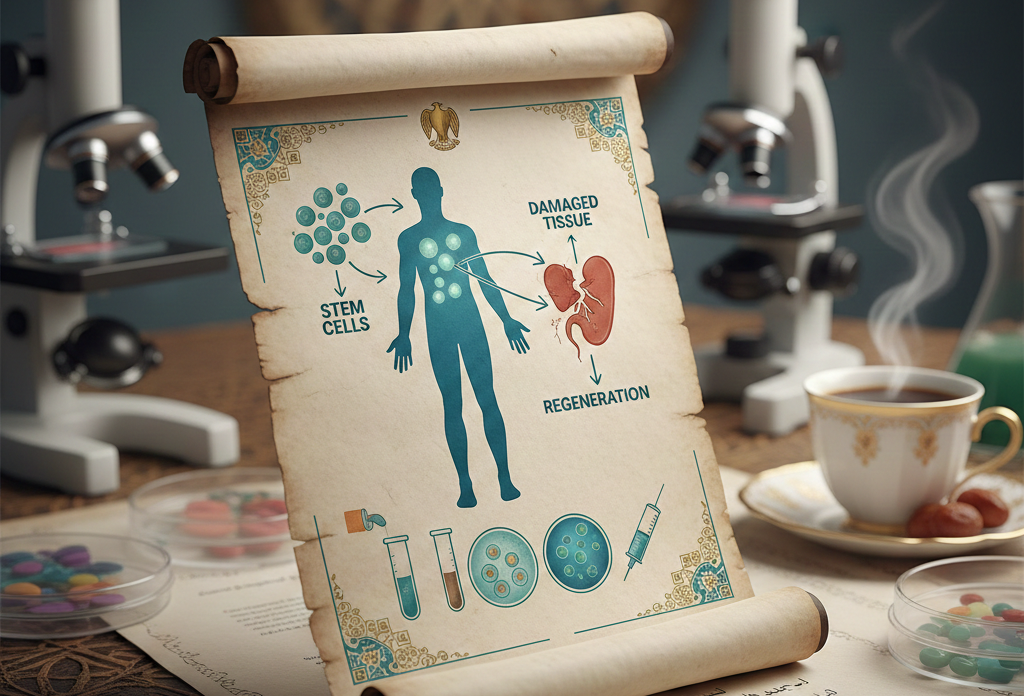
Stem cell therapy is a regenerative healing process. It uses human stem cells to repair or replace the damaged tissues. It is at the cutting edge of medical breakthroughs, providing numerous promising possibilities for treating various conditions.
Whether they are orthopedic, musculoskeletal, neurological, inflammatory, or metabolic disorders, stem cell therapy is the best pick for patients. Like other countries, it is benefiting countless people in Saudi Arabia as well. At the heart of this advanced regenerative therapy lies a carefully and professionally designed procedure. In this blog post, we will break down each step to give you a clear picture of how stem cell therapy works.
1: Medical Examination
The stem cell treatment process starts with a detailed medical assessment of the patient. Professional doctors first take the patient’s medical history. Evaluate the severity of tissue damage and consider the current diagnosis to better proceed.
They check out the imaging reports, such as MRI, X-ray, ultrasound, and CT scans. Other than reports, they briefly analyze the previous treatments and the patient’s overall health status. It is important to note that not all patients are automatically eligible for this treatment. Stem cell therapy is usually considered when conventional medical methods fail, surgery is risky, and the tissues are highly degenerated or inflamed.
2: Stem Cell Source Selection
In stem cell therapy, cells are usually obtained from adult stem cell sources rather than embryonic sources. The most common ones are:
- Bone marrow-derived stem cells.
- Adipose-derived stem cells.
- Umbilical cord-derived cells.
The source choice depends on the patient’s condition being treated and clinical protocols, along with the source availability before starting the process.
3: Stem Cell Collection Process
Autologous therapy, in which the patient’s own cells are used, is the most common method. In this process, the next step is the collection of stem cells. Different methods are used based on the sources of cells. Usually, a local anesthesia is given for bone marrow stem cells collection. A bone marrow extraction kit/needle is inserted to withdraw bone marrow fluid.
The whole process typically takes under an hour. Local anesthesia is also given for fat-derived stem cells collection. A small fat sample is removed. The procedure is outpatient and minimally invasive. Most of the patients usually go home the same day.
4: Cell Processing and Concentration
After stem cell collection, the sample is sent to a processing unit or an ISO-certified biosafety level 2 lab. There, the sample is placed in a centrifuge and spun at a control speed of 300–500 × g (≈1000–1500 rpm) for 10–15 minutes. This helps isolate and concentrate stem cells. The unwanted components are then filtered out, and a top-quality concentrate is prepared.
Remember, the higher the concentration is, the better will be therapeutic potential. That’s why this step is considered highly critical. Cell processing has no specific time duration. It may take from 30 minutes to several hours, depending on the methods, such as simple centrifugation, density-gradient centrifugation, or automated closed-system centrifugation.
5: Activation and Preparation
It’s not a common step. Some clinics follow it in stem cell treatment for Saudi patients. Here, they activate or enhance the stem cell preparation before use. They used to enrich the cells with growth factors, platelet-rich plasma combinations, and biological enhancers.
They often go with specialized culture methods, such as ex vivo expansion, adherence-based enrichment, scaffold cultures, and other such methods. These additions focus on improving the body’s healing signals and anti-inflammatory effects. Activation of stem cells supports more in tissue regeneration.
6: Stem Cell Injection Procedure
It’s the targeted delivery of stem cells to the treatment area. Cells are not transplanted into the bone marrow. Instead, they are precisely delivered to the target tissue. The methods often include direct infusion or intravenous infusion.
Stem cells are either directly injected into joints, tendons, ligaments, muscles, or soft tissue. This direct injection is often guided by ultrasound, fluoroscopy, and CT imaging. The other method is intravenous infusion. In this, stem cells are infused into the bloodstream. It is used when a systemic effect is desired, multi-site benefit is intended, or inflammatory or immune modulation is targeted.
7: Proper Follow Ups & Monitoring
Stem cells begin their degenerative role as they enter the treatment area. They do not simply turn into new tissue instantly. Biological signaling provides its main healing power. Whether you have taken stem cell treatment for autism, Parkinson’s disease, diabetes, stem cell arthritis, or any other disorder, the typical recovery and healing phase takes around 2 to 6 months.
In the first days, mild soreness and temporary inflammation occur at the injection site. In the next 2-6 weeks, inflammation begins to reduce, and tissue response increases. In the last 2-6 months, gradual regeneration effects start being produced. The damaged tissue gains strength and mobility. Physical therapy is often recommended alongside.
That’s why doctors track results throughout the period. They perform regular physical exams and consider imaging scans. They also perform mobility testing for better analysis. Some patients may need repeat injections and supportive therapies. So, with regular follow-ups, doctors better know the patients’ conditions and provide them with the required medical assistance.
How does Stem Cell Treatment for Saudi Patients Benefit Them?
The therapy is highly advantageous for patients. It’s minimally invasive and offers a lower recovery time as compared to surgery. Using patients’ own cells in many cases, the therapy is excellent for tissue repair support and reduced inflammation. It’s the best pick for targeted treatment delivery. In Saudi Arabia, you get this treatment for various disorders, a few include:
- Stem cell treatment for arthritis.
- Stem cell treatment for diabetes.
- Stem cell treatment for Parkinson’s disease.
- Stem cell treatment for autism.
Vital Safety Tips for Patients
- Always choose highly qualified medical professionals.
- Go to the clinics following regulatory standards.
- Make sure cell processing is certified and sterile.
- Get full medical counseling.
Concluding Remarks
Stem cell treatment for Saudi patients provides promising yet quick results if done responsibly, ethically, and professionally. Always be aware of the whole process and never compromise on the quality of treatment. So, if you need an effective treatment for tissue repair, go for the stem cell therapy from standardized clinics with ISO certified biosafety level 2 labs and highly qualified doctors and staff.
FAQs
Will the body reject donor stem cells?
Usually not. Stem cells are naturally immune-privileged. They don’t have the markers that trigger an attack. This lowers the risk of rejection.
Is it right that the age of a patient affects therapy results?
Yes. Younger cells generally have higher potency as compared to the old-aged cells.
What makes stem cells reduce pain?
They stop the cytokine storm that physically lowers the pressure and chemical irritation on your pain receptors.

Njinsky Medical Center
Disclaimer: Results vary and no specific outcome can be promised.
Contact Information
How Stem Cell Therapy Works? A Step-by-Step Guide for Saudi Families
23/02/2026
No Comments
A Complete Guide for Saudi Patients on Stem Cell Therapy
17/02/2026
No Comments